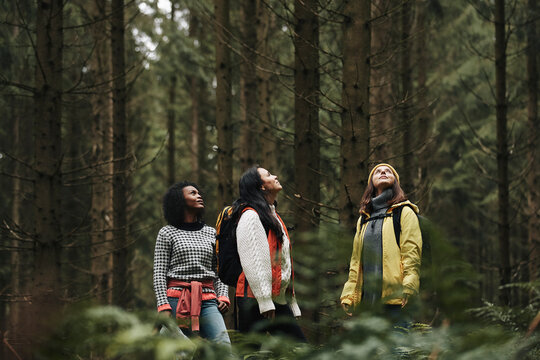
Science shows that everyone can benefit from access to nature. Yet across Canada, many people still face barriers to enjoying the benefits of greenspaces, including improved health and wellness, enhanced community connection, and strengthened climate resilience.
Through its Greenspace for All initiative, the Stewardship Centre for BC is collaborating with community partners to connect underserved communities with nature so that everyone can enjoy the benefits and services it provides.
What is Greenspace?
Greenspaces are vegetated areas of land or wetland within or adjacent to an urban area that provide access to natural habitats, often characterized by native plants, mature trees, and diverse ecosystems. Examples include:
- Forests and trails
- Wetlands and shorelines
- Public parks and greenways
- Conservation areas and nature sanctuaries
Why Greenspace Matters
Greenspaces offer a wide range of environmental, social, and economic benefits, including:
- Creation of important habitat with food and shelter for insects, birds, fish, and mammals, including species at risk and potentially endangered species.
- Climate mitigation, including erosion prevention, flood control, and other valuable forms of community and environmental resilience that are critical in the face of a changing climate.
- Increased tree cover, which moderates and cools ground-level temperatures through the provision of shade, and reduces costs related to heating and cooling buildings.
- Improved community health and well-being by increasing outdoor activity, lowering stress, reducing noise and air pollution, and serving as places to gather and connect with others.
Equitable Access to Greenspace: Current Trends
Across Canada, access to greenspace is often linked to factors like income, ethnicity, gender, sexual orientation, age, mobility, and social inclusion. Marginalized and underserved populations – including Black, Indigenous, and People of Colour (BIPOC), 2SLGBTQIA+ individuals, new immigrants and refugees, low income individuals and families, seniors, youth, women, and people with diverse physical and cognitive abilities – are more likely to face physical, psychological, economic, or social barriers to accessing these spaces, as well as live in areas with fewer greenspaces and fewer opportunities to connect with nature.
Equity-deserving communities are groups of people who experience barriers to accessing opportunities and resources due to systemic discrimination or marginalization. These communities often experience barriers to accessing greenspaces and benefiting from the ecosystem services that greenspaces provide, including attitudinal, historical, social, psychological, and environmental barriers based on age, ethnicity, race, physical and cognitive abilities, economic status, gender, and sexual orientation.
This inequity increases vulnerability to the impacts of climate change, including urban heat islands, flooding, and pollution. Therefore, ensuring equitable access to greenspaces is essential for promoting community resilience and social well-being.
Greenspace for All Project
To support and promote equitable access to greenspace, the Greenspace for All Project was initiated in 2023 as a three-year pilot project to:
- Identify barriers that limit access to greenspaces for equity-deserving communities
- Connect equity-deserving communities to nature and amplify its benefits
- Support community-led solutions and partnerships
- Promote equitable greenspace and climate action strategies
- Build healthier, more climate-resilient communities
To achieve these objectives, SCBC is collaborating with key partners in local and regional governments and community agencies across the Capital, Nanaimo, and Comox Valley Regional Districts.