Background Research
In 2023, the Stewardship Centre for BC partnered with UBC BRITE intern Jenny Muñoz, Environment and Climate Change Canada (ECCC), and Pacific Birds Habitat Joint Venture to ask:
Are regional governments planning for greenspace and climate action in a way that is equitable for all residents?
What We Found: Policy Review Report
Through a review of greenspace and climate adaptation plans and policies in the Capital Regional District (CRD), Regional District of Nanaimo (RDN), and Comox Valley Regional District (CVRD), the authors discovered key gaps and areas for improving the equitable distribution of greenspace and climate action measures.
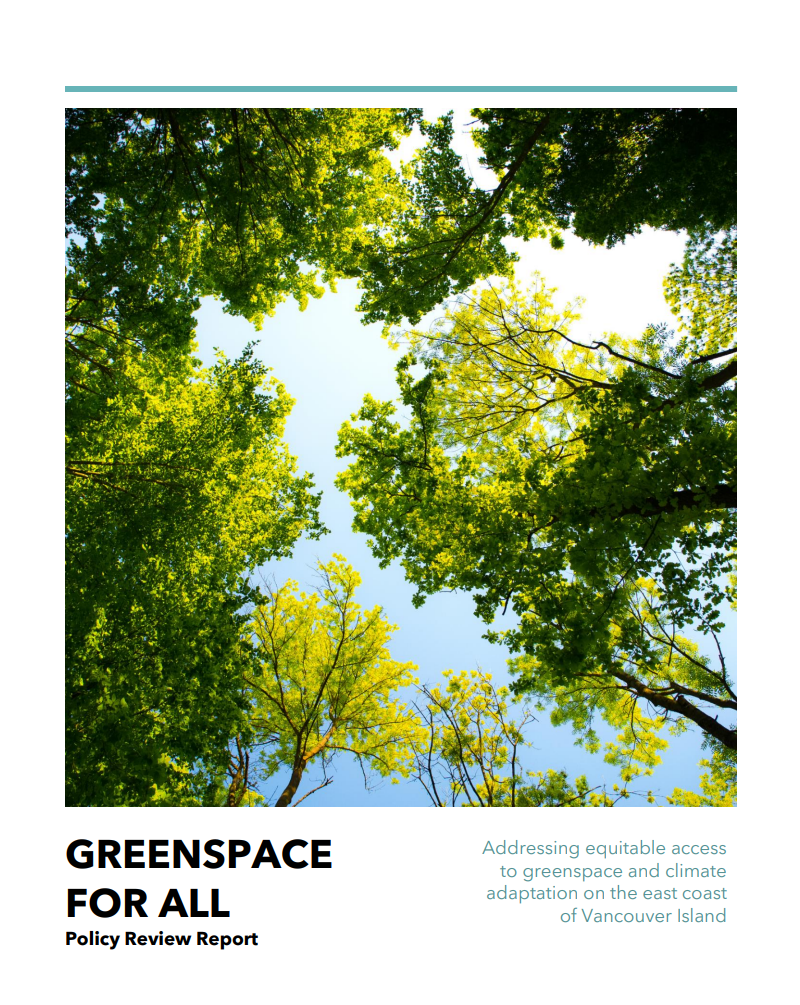
These findings are captured in the Greenspace for All Policy Review Report and offer practical recommendations for regional and local governments, offering a pathway toward a more equitable and climate-resilient future for their communities. Read the full Policy Review Report here.
Visualizing Our Findings Through GIS Analysis
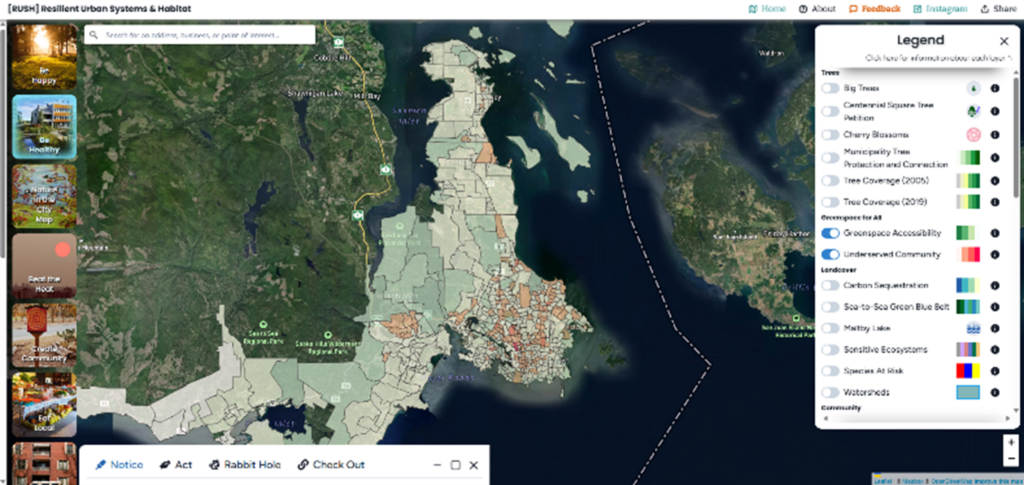
To further support these findings, the research team used GIS analysis to compare proximity to protected greenspaces with socio-economic variables such as income, language, and gender in each of the three regional districts. The results showed that in certain communities, underserved populations are the most disconnected from the benefits of greenspace. These areas now stand out as priority zones for action.
By visualizing the relationship between limited access to greenspaces and sociodemographic factors, policymakers can gain crucial insights to reduce inequalities in access to greenspace and improve social and climate resilience in their communities.
Turning Research into Action
In 2025, SCBC partnered with NatuR&D’s Resilient Urban Systems & Habitat (RUSH) Initiative to bring these insights to the public through an interactive mapping tool. This innovative map highlights community assets, green infrastructure, and climate adaptation measures across the Capital Regional District, providing community members with a “shared language on the vulnerabilities and opportunities for long-term health and climate action.”
By adding data on greenspace accessibility and population demographics, community members and decision-makers can compare this information with other natural and community assets, further supporting efforts to build equitable, healthy, and resilient communities.